
DeltaV Modular Facility Automation: An Engineer's Guide to Portability, Repeatability, and Scale
Modular cleanrooms and prefabricated facilities promise faster deployment and easier replication across sites. But the automation strategy behind them often is what decides whether a modular project actually scales— or stalls in validation. We sat down with Tim Schultz, an AES automation engineer currently embedded in an active modular cleanroom build, for practical, DeltaV-specific guidance on what works in the field.
Table of Contents
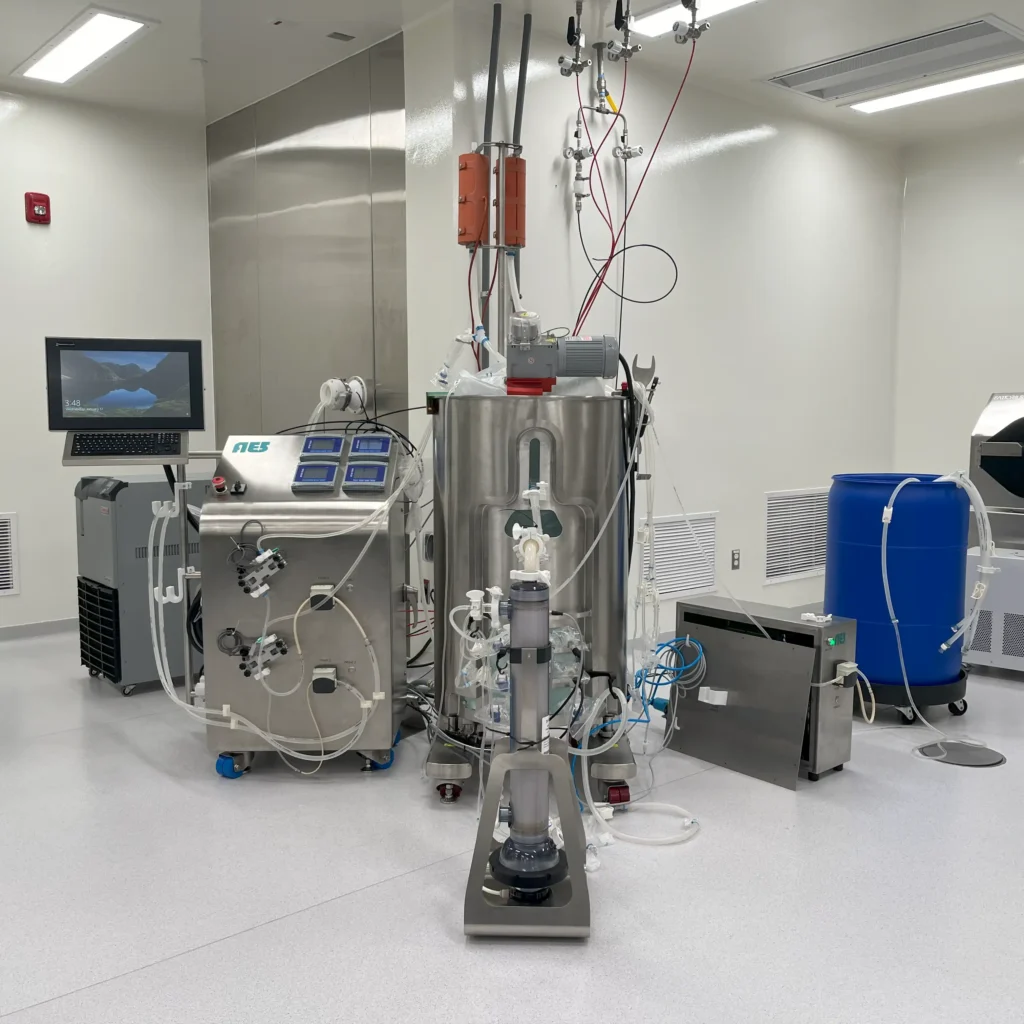
Single-use skids can accelerate biomanufacturing by enabling faster changeovers and flexible capacity. But in a DeltaV-based GMP facility, skid integration is rarely plug-and-play. The biggest risks tend to show up late, during FAT/SAT or commissioning, when teams discover unclear control boundaries, inconsistent alarms, or incomplete vendor handoff documentation.
What Does a Modular Facility Actually Look Like in the Field?
When engineers talk about modular facilities in biotech, what configurations are you most commonly seeing?
One of the ways they leverage DeltaV is by housing I/O cabinets outside the clean rooms and connecting through ceiling connections, so they can alter equipment configurations directly at the I/O level without entering the cleanroom. Across the industry, multi-site replication is also a major driver — companies want facilities that can be duplicated, even down to construction.
“Right now, I’m working with a CMO—a contract manufacturer that produces for multiple clients, so flexibility is a non-negotiable. Their facility is essentially a warehouse with 18 to 20 pre-built, prefab cleanrooms connected by a clean corridor. Some rooms are viral, some aren’t—which changes airflow requirement.”
Tim Schultz
Automation Engineer
Where Does Automation Break in Modular Projects?
What are the most common failure modes you've seen?
“Inconsistent standards. Teams try to build adaptive systems across multiple modules, but the underlying standards aren’t consistent across units—and that breaks replication. It ties directly into validation: if you can use a validated piece, it makes a huge difference. If something is new or altered, it now needs to be validated, and that adds a large layer to the process. So often we end up with a workaround—maybe this isn’t the ideal component, but it’s validated, and it fits. That compromise happens often in this industry. “
The failure modes to watch:
- inconsistent standards across units
- Modified components mid-project
- Vendor black boxes without proper tagging documentation
- Skid integration gaps when tag mapping is left too late
What Makes DeltaV the Right Fit for Modular Environments?
Which DeltaV capabilities matter most for portability and scale?
Libraries. That’s the key capability. Any time you have a validated piece of software that can be replicated across units or sites, you’re saving significant time and money.
DeltaV’s library structure is class-based—at the lowest level, you have function blocks, which are validated and documented by Emerson and rarely change. From there, the structure layers— composites, control modules, equipment modules, and unit classes— with validated objects available at every level. DeltaV’s architecture allows you to create instances of those validated objects across different systems. That’s the core of what makes it well-suited for modular portability and scale.
What Should Be Standardized — and What Can Stay Flexible?
Across modular sites and units, what do you lock down versus leave flexible?
Tagging conventions—lock those down. A consistent tagging standard is critical for replication. When you drop in a new unit, only one or two elements of the tag should change. At the site level, that same logic lets you create a new site by simply changing numbers. Faceplates and security roles should also be locked down, especially for DeltaV upgrade compatibility.
What can stay flexible: phase logic and unit logic, particularly with aliasing, and recipes—it’s very easy to add extra parameters and leave them unpopulated. Recipes are highly flexible without requiring structural changes.
Is "Plug-and-Play" Skid Integration Realistic in GMP?
How close can teams get to plug-and-play with skids in a validated environment?
It’s highly unrealistic—particularly for GMP systems that require validation. In a non-GMP, standalone system, you can get relatively close. But in validated biopharma environments, it doesn’t really happen.
The minimum you need from a skid vendor is their P&IDs and tagging structure. Once you pull that into DeltaV or a SCADA system, you can map their tags to your internal structure and enforce consistency from there. Endor tagging conventions vary widely. The job is understanding their structure and building a clean mapping to yours—that discipline is what makes integration manageable.
What specific practices actually cut schedule in modular projects?
How close can teams get to plug-and-play with skids in a validated environment?
Three things. First, leverage validated modules—if the object is already validated, using it again costs almost nothing in validation time. Second, move away from paper-based validation; paper-based validation adds significant time at every step, and the industry has been shifting toward electronic validation for good reason. Third, build a smart validation plan—it’s easy to say “test everything,” but that approach can multiply your schedule by a factor of ten. Knowing what not to test, based on risk and prior validation status, is where experienced teams save weeks.
A robust MES and solid data capture to support the Performance Qualification process also make a real difference in shortening the path to production.
Build for Replication From Day One
Modular facilities don’t fail because the technology isn’t capable—they fail because the automation strategy wasn’t designed for replication from the start.
The principles that hold across every modular project: standardize tagging conventions before configuration begins, leverage validated DeltaV library objects at every level, plan for 21 CFR Part 11 compliance early, and build a risk-based validation plan that defines what not to test. Get those right, and modular automation becomes a competitive advantage rather than a recurring risk.